Überseekonzerne sind von deinem (europäischem) Geld abhängig – und warum bewusster Konsum alles verändert
Wir betrachten multinationale Überseekonzerne oft wie unantastbare Götter des globalen Marktes. Sie besitzen gigantische Fabriken, kontrollieren weltweite Transportflotten und verfügen über Budgets, die die Bruttoinlandsprodukte mancher Staaten in den Schatten stellen. Aber in Wahrheit haben sie eine fundamentale Schwachstelle.
Diese Schwachstelle bist du. Genauer gesagt: Dein Geld. Die riesigen Gewinne, die diese Konzerne anhäufen, entstehen nicht im luftleeren Raum. Sie stammen zu einem erheblichen Teil direkt aus den Geldbörsen europäischer Verbraucher. Der europäische Binnenmarkt ist einer der kaufkräftigsten Konsumräume dieses Planeten. Ohne die Milliarden, die wir täglich an der Supermarktkasse für globale Marken ausgeben, würden diese scheinbar übermächtigen Imperien ins Wanken geraten. Es ist Zeit, diese Dynamik zu verstehen und unsere wirtschaftliche Macht zurückzufordern.
Der goldene Esel der Weltwirtschaft: Die europäische Kaufkraft
Europa wird im globalen Vergleich oft als reiner Konsummarkt unterschätzt. Doch die blanken Zahlen sprechen eine andere Sprache: Die Europäische Union beherbergt über 440 Millionen zahlungskräftige Konsumenten. Wenn Überseekonzerne ihre globalen Wachstumsstrategien planen, steht Europa immer ganz oben auf der Liste. Warum? Weil die Kaufkraft hoch, die Infrastruktur stabil und die Konsumlust verlässlich ist.
Das bedeutet im Umkehrschluss: Überseekonzerne sind strukturell von europäischem Geld abhängig. Sie brauchen unsere Umsätze, um ihre gigantischen Forschungs- und Entwicklungskosten zu decken, ihre Aktionäre in Übersee zu befriedigen und ihre dominante Marktstellung zu halten. Unser Konsumverhalten finanziert ihre weltweite Vormachtstellung.
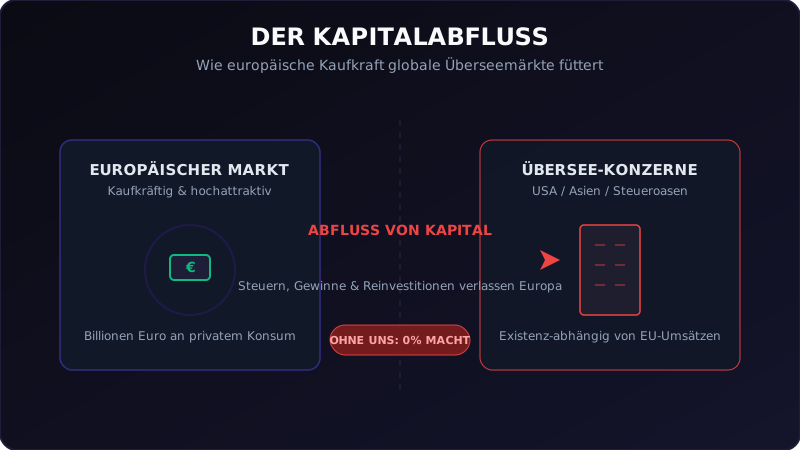
Jedes Mal, wenn wir unbedacht zu einem Produkt greifen, das außerhalb unseres Kontinents produziert wurde, beteiligen wir uns an einem permanenten Kapitalabfluss. Das Geld verlässt den europäischen Kreislauf, wird in fernen Steueroasen verbucht oder fließt als Dividende an ausländische Investoren. Europa verliert dadurch Liquidität, Steuereinnahmen und wirtschaftliche Unabhängigkeit. Wir füttern die Giganten – und wundern uns, warum heimische Betriebe ums Überleben kämpfen.
Der Multiplikator-Effekt: Warum dein Euro in Europa bleiben muss
Was passiert eigentlich mit einem Euro, den du für ein europäisches Produkt ausgibst, im Vergleich zu einem Euro, den du einem Überseekonzern überweist? Der Unterschied lässt sich mit einem einfachen wirtschaftlichen Prinzip erklären: dem lokalen Multiplikator-Effekt.
Wenn du ein Produkt mit europäischer Wertschöpfung kaufst – zum Beispiel Gemüse vom regionalen Bauern oder ein Duschgel eines europäischen Herstellers –, bleibt dein Geld im System. Es zahlt das Gehalt des Landwirts oder des Fabrikarbeiters. Dieser Arbeiter kauft mit seinem Gehalt wiederum beim Bäcker um die Ecke ein oder bezahlt seinen lokalen Handwerker. Der Hersteller zahlt Körperschaftssteuern in Europa, und die Angestellten zahlen Einkommenssteuern. Dieses Steuergeld fließt direkt in unsere Kitas, Schulen, Krankenhäuser und Straßen. Aus einem einzigen Euro entstehen durch die Zirkulation mehrere Euro an wirtschaftlicher Aktivität und gesellschaftlichem Nutzen vor Ort.
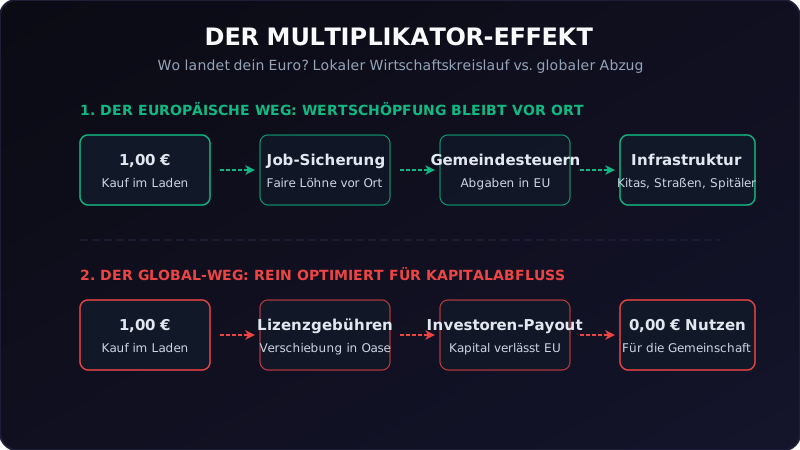
Kaufst du dagegen das Produkt des Überseekonzerns, ist dieser Kreislauf sofort unterbrochen. Der Großteil des Geldes verlässt Europa augenblicklich. Der Konzern nutzt ausgefeilte Steuersparmodelle, um in Europa minimale oder gar keine Ertragssteuern zu zahlen. Die Gewinne fließen in Steueroasen, die Produktion findet unter oft prekären Bedingungen in Drittländern statt, und der europäische Steuerzahler geht leer aus. Dein Euro ist weg – unwiederbringlich verloren für unsere Gemeinschaft.
"Jeder Euro ist eine Stimme. Wenn wir uns bewusst für Produkte mit europäischer Wertschöpfung entscheiden, investieren wir in die Zukunft unseres eigenen Lebensraums, sichern Arbeitsplätze vor Ort und verringern die Abhängigkeit von globalen Krisen."
Die Illusion der Herkunft: Die Tricks der Global Player
"Ich kaufe doch schon europäisch!", denkst du dir vielleicht. Doch die Konzerne wissen ganz genau, dass der Trend zu regionalen und nachhaltigen Produkten geht. Deshalb haben sie das Marketing-Tarnen perfektioniert.
Sie kaufen traditionsreiche, europäische Marken auf und lassen das Design und den Namen unangetastet. Für dich sieht das Produkt im Regal aus wie der vertraute Klassiker aus der Region. Auf der Rückseite, winzig klein gedruckt, steht dann die Wahrheit: Gehört einer Holding mit Sitz in Übersee, produziert am anderen Ende der Welt.
Oder sie nutzen rechtliche Grauzonen. Ein Lebensmittel wird mit einer großen europäischen Flagge bedruckt, weil der letzte Verarbeitungsschritt (das Abpacken) in der EU stattfand. Die Rohstoffe wurden jedoch unter Missachtung von Umwelt- und Sozialstandards billig importiert. Dieser Etikettenschwindel macht es dem Verbraucher fast unmöglich, im stressigen Supermarktalltag die richtige Wahl zu treffen.
EuroScan: Dein digitaler Filter gegen den Etikettenschwindel
Genau für diese Herausforderung haben wir die EuroScan App geschaffen. Sie ist dein persönlicher, digitaler Filter am Supermarktregal. Sie blickt hinter die Fassaden der Marketingabteilungen und zeigt dir in Echtzeit die wahre DNA eines Produkts.
Die Funktionsweise ist denkbar einfach, aber im Hintergrund arbeitet eine komplexe Technologie. Wenn du im Laden vor dem Regal stehst, scannst du mit der EuroScan App einfach den Barcode (EAN) des Artikels. Innerhalb von Millisekunden läuft folgender Prozess ab:
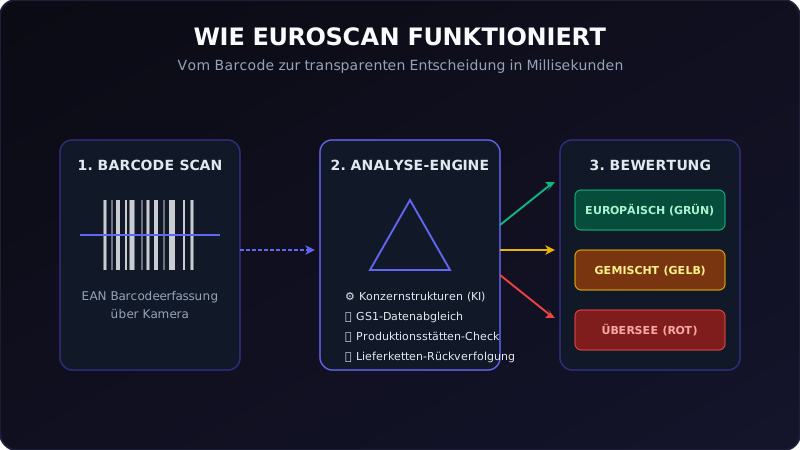
Unsere Datenbank gleicht die EAN-Nummer mit den offiziellen GS1-Herstellerdaten ab. Gleichzeitig analysiert unsere KI-gestützte Engine die dahinterstehenden Konzernstrukturen. Wer ist die tatsächliche Muttergesellschaft? Wo fließen die Gewinne hin? Wo liegen die Hauptproduktionsstätten?
Das Ergebnis wird dir als intuitive **Ampel** angezeigt:
- 🟢 GRÜN: Echte europäische Wertschöpfung. Der Hersteller hat seinen Hauptsitz in Europa, zahlt hier Steuern, und die Produktion sowie die Rohstoffe stammen maßgeblich aus europäischen Ländern.
- 🟡 GELB: Gemischte Wertschöpfung. Zum Beispiel ein europäisches Unternehmen mit Produktion in Asien oder ein globaler US-Konzern, der jedoch große Produktionswerke in Europa betreibt und lokale Arbeitsplätze stellt.
- 🔴 ROT: Reine Übersee-Wertschöpfung. Das Geld verlässt Europa direkt. Keine nennenswerte Wertschöpfung oder Steuerleistung in Europa.
Fazit: Mach den Unterschied – Einkauf für Einkauf
Überseekonzerne sind nicht unbesiegbar. Sie stehen auf tönernen Füßen, die aus unserem Konsumgeld betoniert sind. Sobald wir anfangen, dieses Geld gezielt umzuleiten, verändern sich die Spielregeln.
Es geht nicht darum, ab sofort perfekt zu sein oder asketisch zu leben. Es geht darum, im Alltag bewusstere Entscheidungen zu treffen. Mit der EuroScan App hast du das mächtigste Werkzeug dafür direkt in der Hosentasche. Lass uns gemeinsam dafür sorgen, dass unsere europäische Kaufkraft dort bleibt, wo sie hingehört: in Europa.
Hol dir die Kontrolle über dein Geld zurück
Lade EuroScan jetzt kostenlos herunter und scanne deinen nächsten Einkauf. Schnell, unabhängig und transparent.
EuroScan im Play StoreOverseas Corporations Depend on Your (European) Money – and Why Conscious Consumption Changes Everything
We often view multinational overseas corporations as untouchable gods of the global market. They own gigantic factories, control worldwide transport fleets, and command budgets that dwarf the gross domestic products of some nations. But in truth, they have a fundamental weakness.
That weakness is you. More precisely: Your money. The enormous profits these corporations amass do not materialize in a vacuum. They come, to a significant extent, directly from the wallets of European consumers. The European single market is one of the most powerful consumer markets on this planet. Without the billions we spend daily at the supermarket checkout on global brands, these seemingly mighty empires would begin to totter. It’s time to understand this dynamic and reclaim our economic power.
The Golden Donkey of the Global Economy: European Purchasing Power
Europe is often underestimated in global comparisons as a pure consumer market. But the hard numbers tell a different story: The European Union is home to over 440 million consumers with significant purchasing power. When overseas corporations plan their global growth strategies, Europe is always at the very top of the list. Why? Because purchasing power is high, infrastructure is stable, and the propensity to consume is reliable.
The corollary of this is: Overseas corporations are structurally dependent on European money. They need our revenues to cover their gigantic research and development costs, satisfy their shareholders overseas, and maintain their dominant market position. Our consumption habits finance their global supremacy.
Every time we unthinkingly reach for a product manufactured outside our continent, we participate in a permanent capital outflow. The money leaves the European economic cycle, is booked in distant tax havens, or flows as dividends to foreign investors. As a result, Europe loses liquidity, tax revenue, and economic independence. We feed the giants – and then wonder why local businesses are struggling to survive.
The Multiplier Effect: Why Your Euro Must Stay in Europe
What actually happens to one euro you spend on a European product, compared to one euro you send to an overseas corporation? The difference can be explained by a simple economic principle: the local multiplier effect.
When you buy a product with European added value – for example, vegetables from a regional farmer or a shower gel from a European manufacturer – your money stays in the system. It pays the salary of the farmer or the factory worker. That worker, in turn, uses their salary to buy from the local bakery or pay their local tradesperson. The manufacturer pays corporate taxes in Europe, and employees pay income taxes. This tax money flows directly into our daycare centers, schools, hospitals, and roads. From a single euro, circulation creates several euros' worth of economic activity and societal benefit locally.
If, on the other hand, you buy the product from an overseas corporation, this cycle is immediately broken. Most of the money leaves Europe instantly. The corporation uses sophisticated tax avoidance models to pay minimal or no income tax in Europe. Profits flow to tax havens, production often takes place under precarious conditions in third countries, and the European taxpayer gets nothing. Your euro is gone – irretrievably lost to our community.
"Every euro is a vote. When we consciously choose products with European added value, we invest in the future of our own living space, secure local jobs, and reduce our dependence on global crises."
The Illusion of Origin: The Tricks of Global Players
"But I'm already buying European!" you might think. However, corporations are well aware of the trend towards regional and sustainable products. That's why they have perfected marketing camouflage.
They buy up traditional European brands and leave the design and name untouched. To you, the product on the shelf looks like the familiar classic from the region. On the back, in tiny print, the truth is revealed: Owned by a holding company based overseas, produced at the other end of the world.
Or they exploit legal gray areas. A food product is printed with a large European flag because the last processing step (packaging) took place in the EU. However, the raw materials were cheaply imported, often disregarding environmental and social standards. This label fraud makes it almost impossible for consumers to make the right choice during a stressful supermarket visit.
EuroScan: Your Digital Filter Against Label Fraud
It is precisely for this challenge that we created the EuroScan app. It is your personal, digital filter at the supermarket shelf. It sees behind the facades of marketing departments and shows you the true DNA of a product in real time.
The way it works is very simple, but a complex technology operates in the background. When you are standing in front of the shelf at the store, you simply scan the barcode (EAN) of the item with the EuroScan app. Within milliseconds, the following process takes place:
Our database matches the EAN number with official GS1 manufacturer data. At the same time, our AI-powered engine analyzes the underlying corporate structures. Who is the actual parent company? Where do the profits flow? Where are the main production sites?
The result is displayed to you as an intuitive traffic light:
- 🟢 GREEN: Genuine European added value. The manufacturer has its headquarters in Europe, pays taxes here, and both production and raw materials come predominantly from European countries.
- 🟡 YELLOW: Mixed added value. For example, a European company with production in Asia, or a global US corporation that operates large production plants in Europe and provides local jobs.
- 🔴 RED: Pure overseas added value. The money leaves Europe directly. No significant value creation or tax contribution in Europe.
Conclusion: Make the Difference – One Purchase at a Time
Overseas corporations are not invincible. They stand on feet of clay, cemented by our consumer money. Once we start deliberately redirecting this money, the rules of the game change.
It’s not about being perfect from now on or living an ascetic life. It’s about making more conscious decisions in everyday life. With the EuroScan app, you have the most powerful tool for this right in your pocket. Let’s work together to ensure that our European purchasing power stays where it belongs: in Europe.
Take Back Control of Your Money
Download EuroScan for free now and scan your next purchase. Fast, independent, and transparent.
EuroScan on Google Play